

2026 Editorial Guide
Pakistan’s return to the 2026 FIH Hockey World Cup has brought the country’s national sport back into focus.
For a nation that has won the Men’s Hockey World Cup a record four times, simply returning to the tournament matters. Pakistan missed the 2023 World Cup before earning its place in the 2026 edition through the qualifiers in Egypt. (FIH)
But qualification is not the same as revival.
The more important question is what happens after the excitement of a major tournament fades:
Can Pakistan build enough young players to make international competitiveness sustainable again?
That is the real comeback.
A Hockey Revival Has to Start Below the National Team
Pakistan’s recent international progress offers encouragement. The men’s team reached the final of the 2025 FIH Nations Cup and subsequently returned to the FIH Pro League for the 2025-26 season. (FIH)
Those results can create attention. They cannot create a player-development system on their own.
For Pakistan to consistently compete with the world’s leading hockey nations, the base beneath the senior team has to become much larger.
That means more children playing regularly, more schools offering hockey, more functioning clubs, better coaching and enough competition for promising players to keep progressing.
Instead of asking only “Where will the next international player come from?”, Pakistan first needs to ask:
Where will the next thousand young hockey players come from?
Elite players can then emerge from that larger group.
Make Hockey Easier to Start
Cricket has one enormous grassroots advantage in Pakistan: children can improvise it almost anywhere.
Hockey has a higher entry barrier. Players need sticks, suitable space, coaching and eventually access to an appropriate playing surface.
Reducing that barrier should be one of the priorities of any serious revival.
Schools are particularly important because they allow children to experience hockey before they have already committed themselves to another sport. Introductory programmes do not need to begin with full-field eleven-a-side matches. Small-sided games, basic stick skills and short competitions can introduce the sport with fewer players and less space.
The objective at this stage is not to identify national-team players at age nine.
It is to make enough children enjoy hockey enough to play again.
Those who show greater interest can then move towards clubs, academies and competitive programmes.
Give Young Players Somewhere to Progress
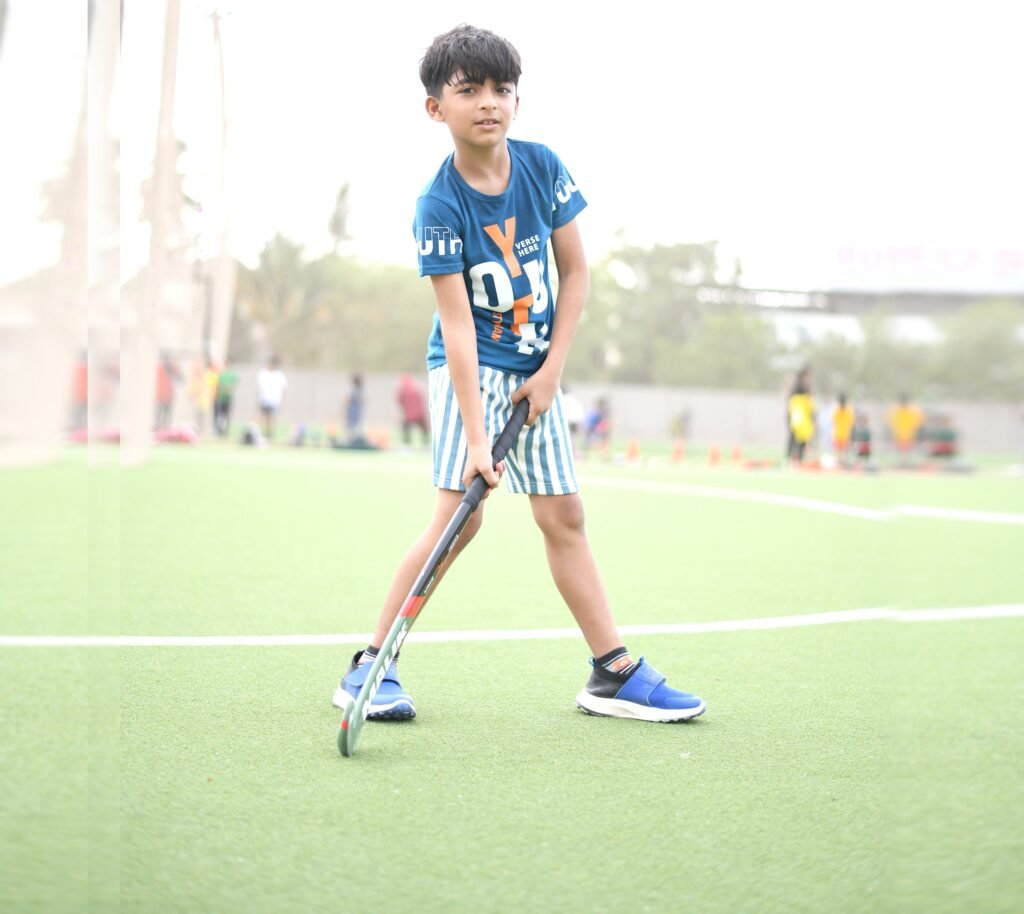
Getting a child to try hockey is only the first step.
The next challenge is creating a visible route forward.
A young player should be able to move from introductory hockey into structured coaching, regular matches and gradually stronger competition without having to find each next step independently.
school or community hockey → local coaching → club competition → district and provincial hockey → national youth competition → high-performance programmes
The exact structure can vary between cities, but the principle is important.
Training develops technique. Competition develops the ability to use that technique under pressure.
Players need both.
Regular matches expose young athletes to different opponents, tactical situations and match pressure. They also allow coaches and selectors to assess performance over time rather than relying heavily on occasional trials.
Coaching Has to Develop With the Game
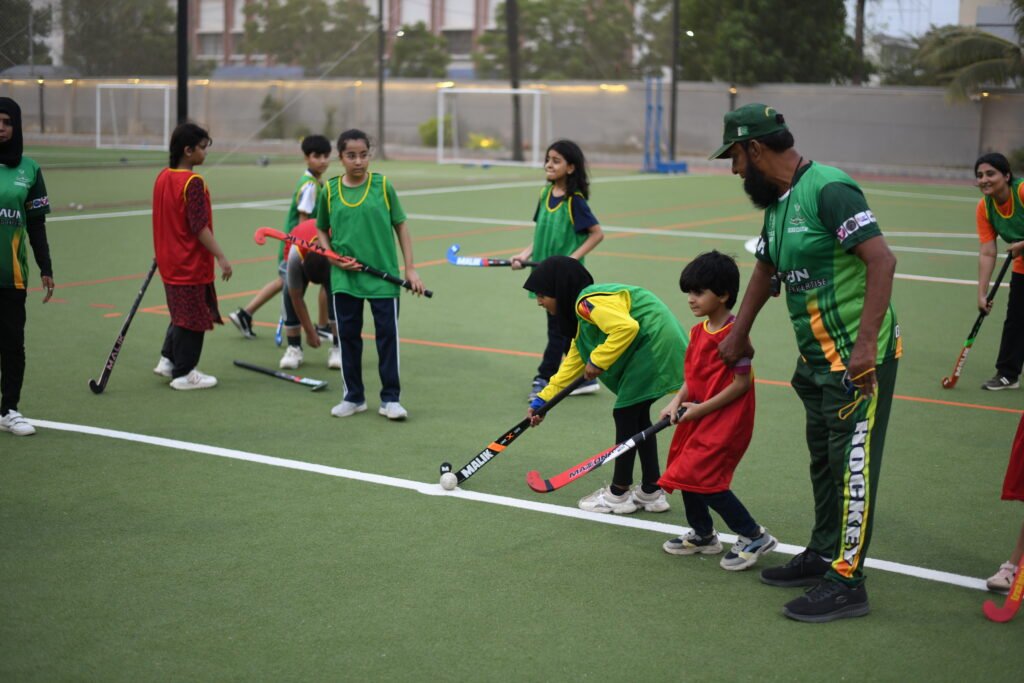
More coaching is useful only if the quality of coaching improves too.
Modern international hockey demands speed, technical control, quick decision-making, fitness and tactical awareness. Young players need strong fundamentals, but those fundamentals eventually have to work under real match pressure.
Good junior development should therefore progress naturally.
A beginner first needs control of the stick, passing, receiving, movement and basic defensive skills. As the player advances, training can become more specialised – finishing, pressing, penalty corners, goalkeeping, drag-flicking, physical preparation and tactical decision-making.
Pakistan’s development system should also invest in coaches who understand how to train different age groups, rather than expecting every young player to follow the same routine.
The aim is not to make junior hockey unnecessarily complicated.
It is to make sure talented players reach senior competition with a stronger technical foundation.
Keeping Players May Be Harder Than Finding Them
Pakistan can discover talented teenagers and still lose them before they reach senior hockey.
That is a different problem from talent identification.
As players grow older, sport begins competing with education, employment, travel costs and family responsibilities. Equipment, coaching and tournament participation can also become more expensive as the level rises.
A serious hockey pathway therefore needs to consider what happens between promising junior and established senior player.
Club opportunities, institutional teams, scholarships, educational support and meaningful domestic competition can all make it easier for young athletes to continue.
Without a realistic next stage, some of the best players identified at 14 or 15 may simply disappear from the system a few years later.
Pakistan does not only need to discover talent.
It needs to retain it.
Karachi Shows Why Local Associations Matter
National revival ultimately has to be built city by city.
The Karachi Hockey Association (KHA) is relevant here because local associations operate much closer to young players than the national team does. Their role can include organising clubs, competitions, coaching opportunities and programmes that bring new players into the sport.
KHA has previously organised inter-club talent competitions recognised by the Asian Hockey Federation, including five-a-side events involving registered Karachi clubs. (Asian Hockey Federation)
More recently, KHA ran its 2026 Summer Hockey Camp, including free youth training at KHA Legends Arena. (Karachi Hockey Association)
This is also where the role of KHA Legends Arena makes sense.
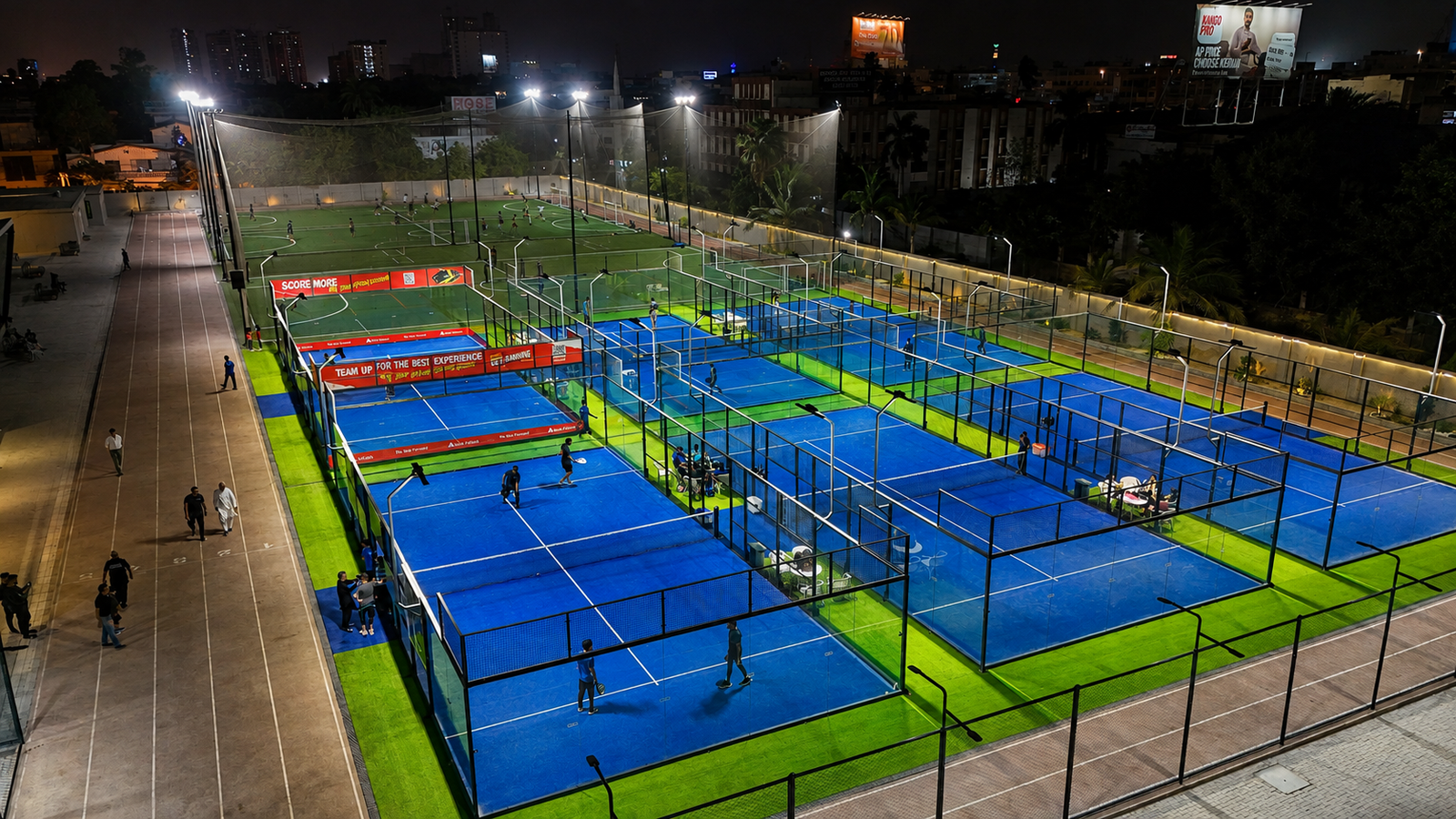
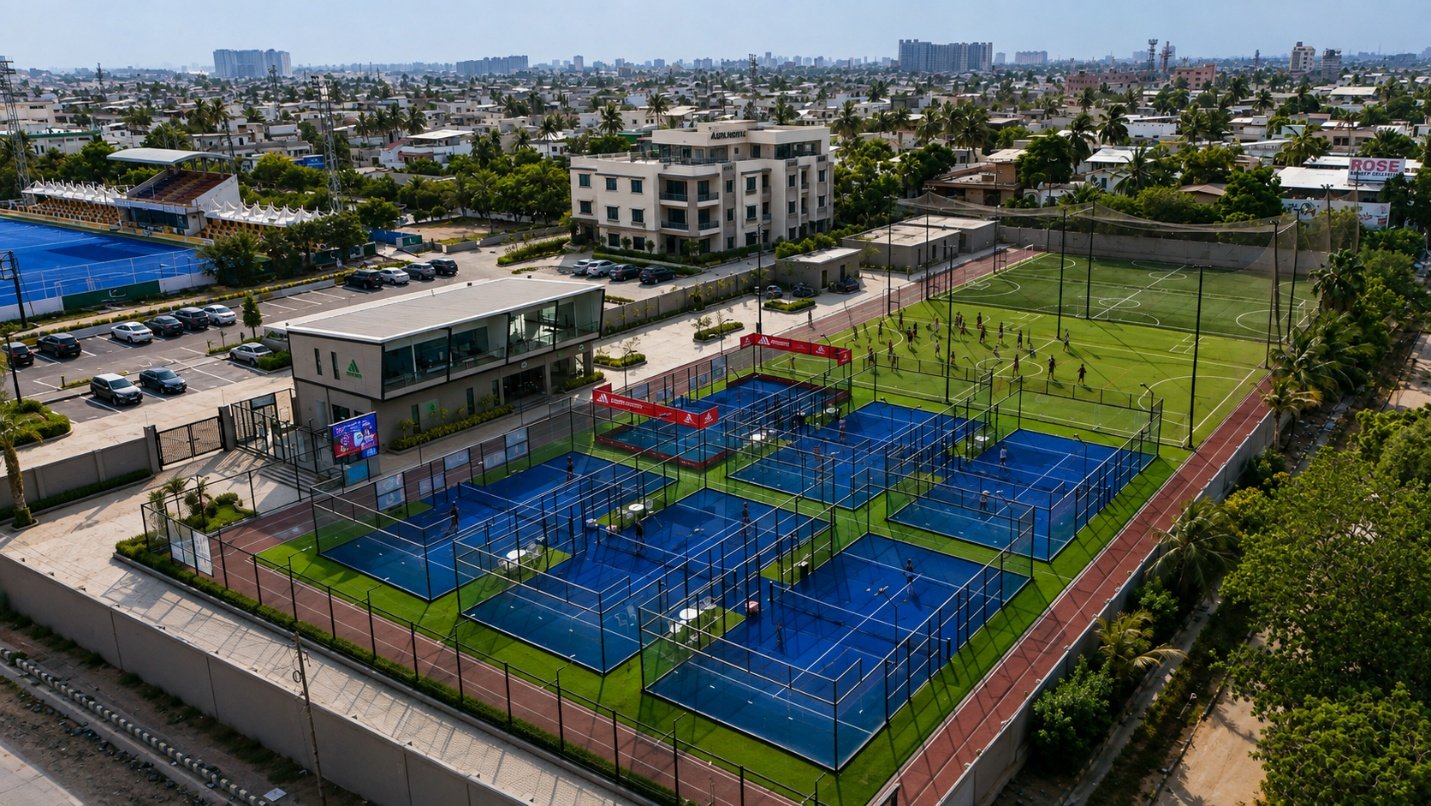
Its contribution is not to manage Pakistan hockey or replace specialised hockey institutions. Its value is simpler: providing a place where people can play, practise and be exposed to hockey in an active multi-sport environment.
Hosting part of KHA’s 2026 summer training programme illustrates how the two roles can complement each other: the association develops and organises hockey activity, while accessible sports infrastructure gives that activity somewhere to happen. (Karachi Hockey Association)
The important test is continuity.
A camp can introduce players to hockey. A functioning system gives them somewhere to go after the camp ends.
Girls Must Be Part of the Same Pathway
A new generation cannot mean only boys.
Pakistan needs more opportunities for girls to encounter hockey at school, receive coaching, join teams and compete regularly.
Karachi already has evidence that the talent exists. Asian Hockey Federation reporting on youth competition in Sindh has documented women’s hockey participation and strong performances by Karachi players. (Asian Hockey Federation)
The challenge is turning individual events and teams into a more continuous development route.
Expanding girls’ hockey would not only strengthen the potential national talent pool. It would also bring more schools, families, coaches and communities into the sport.
A successful revival should make hockey more accessible than it was before, not simply restore the old structure.
International Success Still Matters
Grassroots development takes years, but the senior national team can accelerate interest immediately.
Pakistan’s return to the 2026 World Cup puts the green shirt back on one of hockey’s biggest stages after missing the previous edition. (FIH)
Moments like this can make young players curious about the game and remind older generations why hockey once occupied such an important place in Pakistani sport.
The opportunity is to connect that inspiration with participation.
When a child watches Pakistan play and wants to try hockey, there should be an obvious next step: a school programme, local club, academy, camp or nearby place to practise.
Without that connection, international success creates a moment.
With it, international success can help create players.
Can Pakistan Really Build a New Generation?
Yes – but not by trying to recreate the past.
Pakistan hockey needs a larger grassroots base, accessible places to play, capable coaches, regular competition and a clear route for players who want to progress.
The country’s history can create pride. The national team can create attention.
Neither can replace the development work happening below them.
The strongest evidence of a hockey comeback will not simply be Pakistan climbing a ranking or qualifying for another tournament.
It will be seeing more children with hockey sticks, more schools and clubs playing regularly, and more young players with somewhere meaningful to go next.
That is how Pakistan moves from celebrating its hockey history to creating another one.
Visit KHA Legends Arena
Whether you want to book a padel court, play futsal or football, practice cricket, train in hockey, play volleyball, join coaching or use the jogging track, KHA Legends Arena offers different ways to stay involved in sport.
-
KHA Legends Arena
Main University Road, Gulshan-e-Iqbal, Block 5, near NIPA, Karachi -
Bookings & Enquiries:
+92 302 672 9999
+92 309 761 9999
Follow KHA Legends Arena on social media for upcoming tournaments, events, offers and sports updates.
KHA Legends Arena — The Arena of Champions.